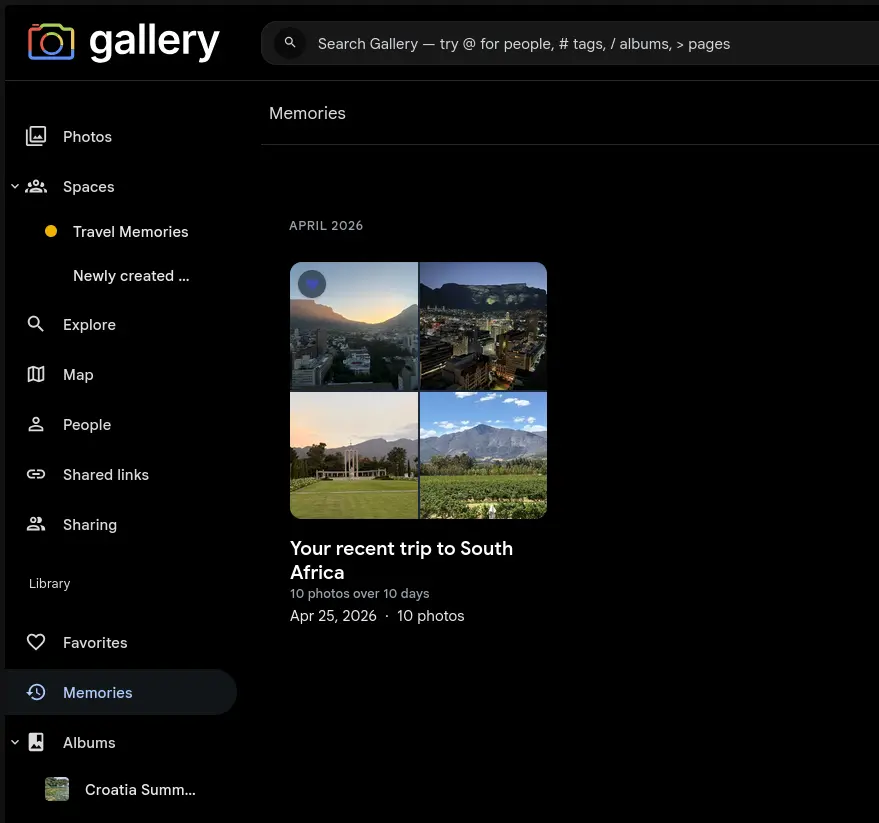
The daily memory lane is good for today's highlights, but it used to be a poor place to revisit something Gallery generated last week or last month. The new Memories page gives generated memories a permanent browsing surface in the Library section of the web sidebar.
It keeps the existing full-screen memory viewer, but adds a history index in front of it: open a card from the archive and Gallery knows you came from history, not the daily carousel.
Browse retained memories by date
The archive groups retained generated memories by the date they were shown, so older recaps stay readable instead of collapsing into one long feed. Each card uses the memory's title, subtitle, preview assets, date, and saved state to make scanning fast.
A local search field narrows the page without another server round trip, and an All/Saved filter lets you jump straight to memories you deliberately kept.
You control how long memories last
Admins can configure generated memory retention from Administration → Settings → Memories. The default keeps unsaved generated memory records for 365 days, which gives the archive real history without letting old generated rows grow forever.
Set a custom day count if you want a shorter or longer archive. Set retention to 0 when you want generated memory records kept indefinitely.
Cleanup stays careful
Retention only removes unsaved generated memory records. Saved memories are kept regardless of age, and cleanup still removes links to hidden, archived, or deleted assets even when generated memory retention is set to forever.
That separation matters: you can keep the memory archive generous without preserving stale asset references or losing something you explicitly saved.
Ready for rule-generated memories
Recent trip and birthday memories now create richer server-defined titles and subtitles. The archive gives those generated stories somewhere to accumulate, so a trip recap or birthday set can be rediscovered after its original carousel window has passed.
Together, the Memories page and retention controls turn memories from a daily transient surface into a browseable part of the library.