AI
Face Suggestions
Face recognition plays it safe and skips the close calls. Gallery brings those near-misses back to you, one face at a time, on the person page where they belong.
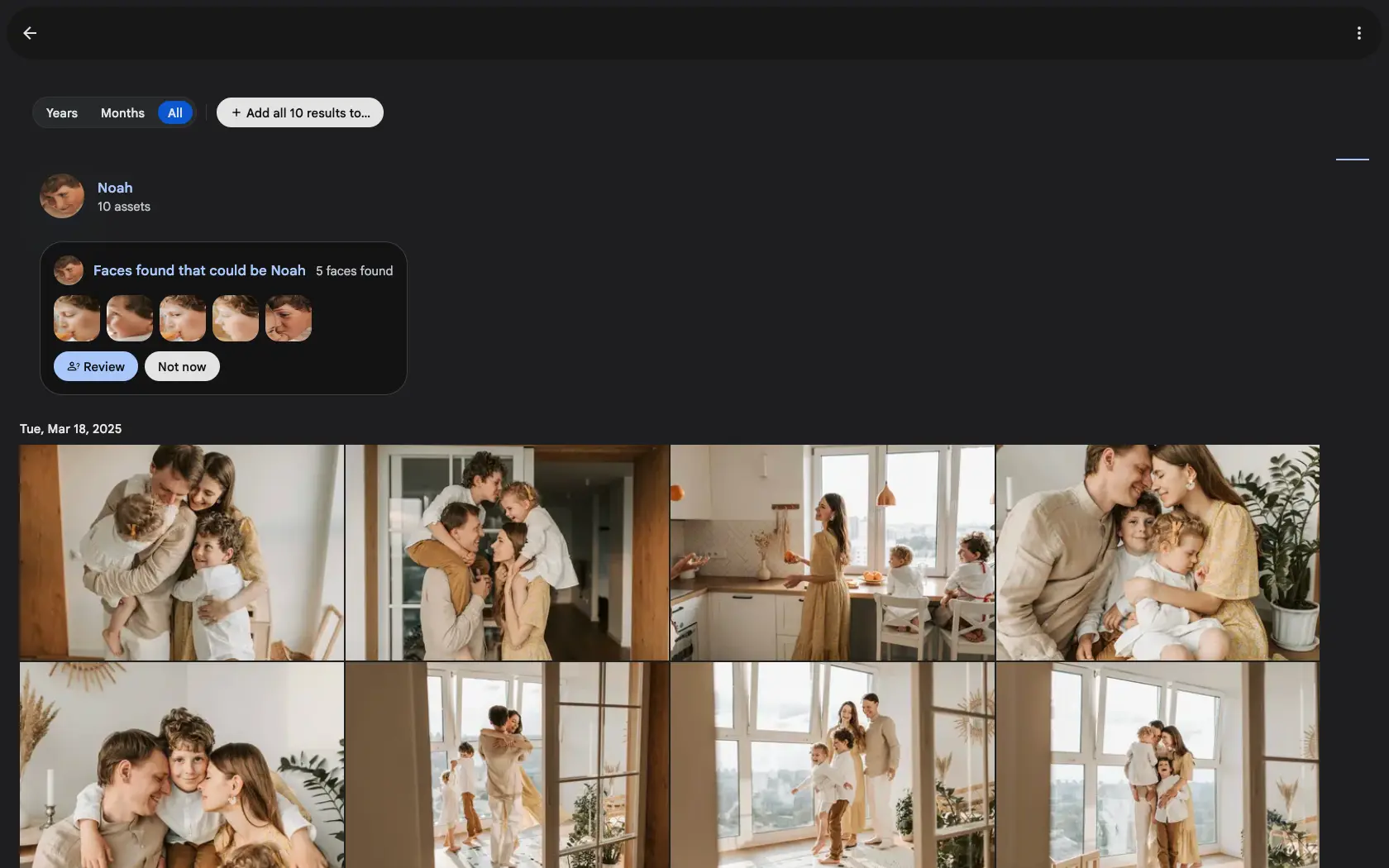
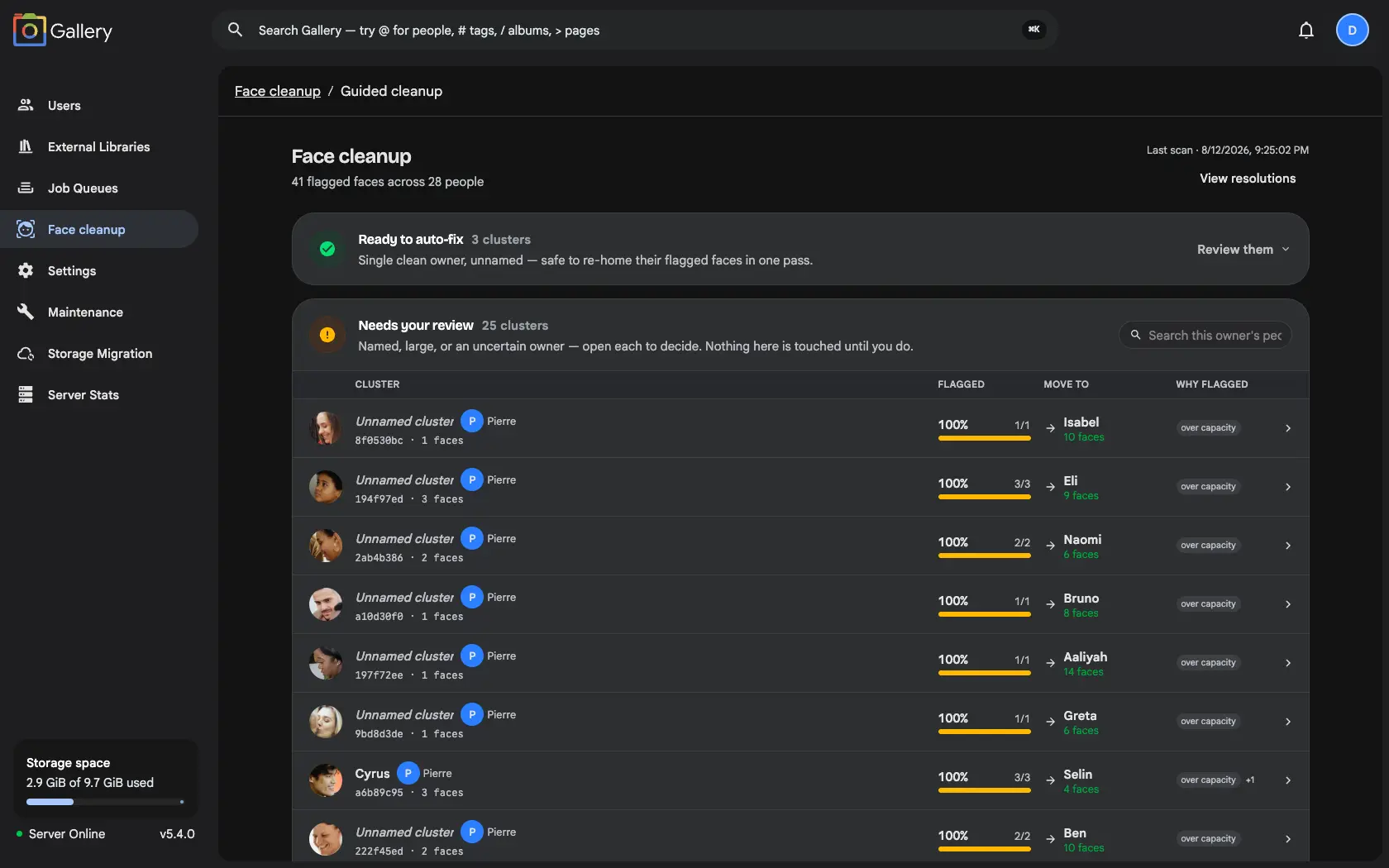
The face release. Recognition is deliberately cautious — a wrong assignment is far harder to untangle than one it never made, so it leaves the doubtful calls unmade and quietly misses a lot of close ones. This release bridges that gap from both ends: Face Suggestions brings the near-misses back to you on the person page, and Face Cleanup finds the clusters that did get mixed up and lets you re-home every face. Both now run on one shared verdict layer, so a decision made in either is permanent and respected by the other. Alongside them, contextual filters turn the viewer’s info panel into a filtering surface, and Shared Spaces close a round of collection gaps across web and mobile.
Face recognition plays it safe and skips the close calls. Gallery brings those near-misses back to you, one face at a time, on the person page where they belong.
When recognition does get it wrong, a console finds the mixed-up clusters and lets you re-home every face, guided by a scan or by hand on anyone you pick.
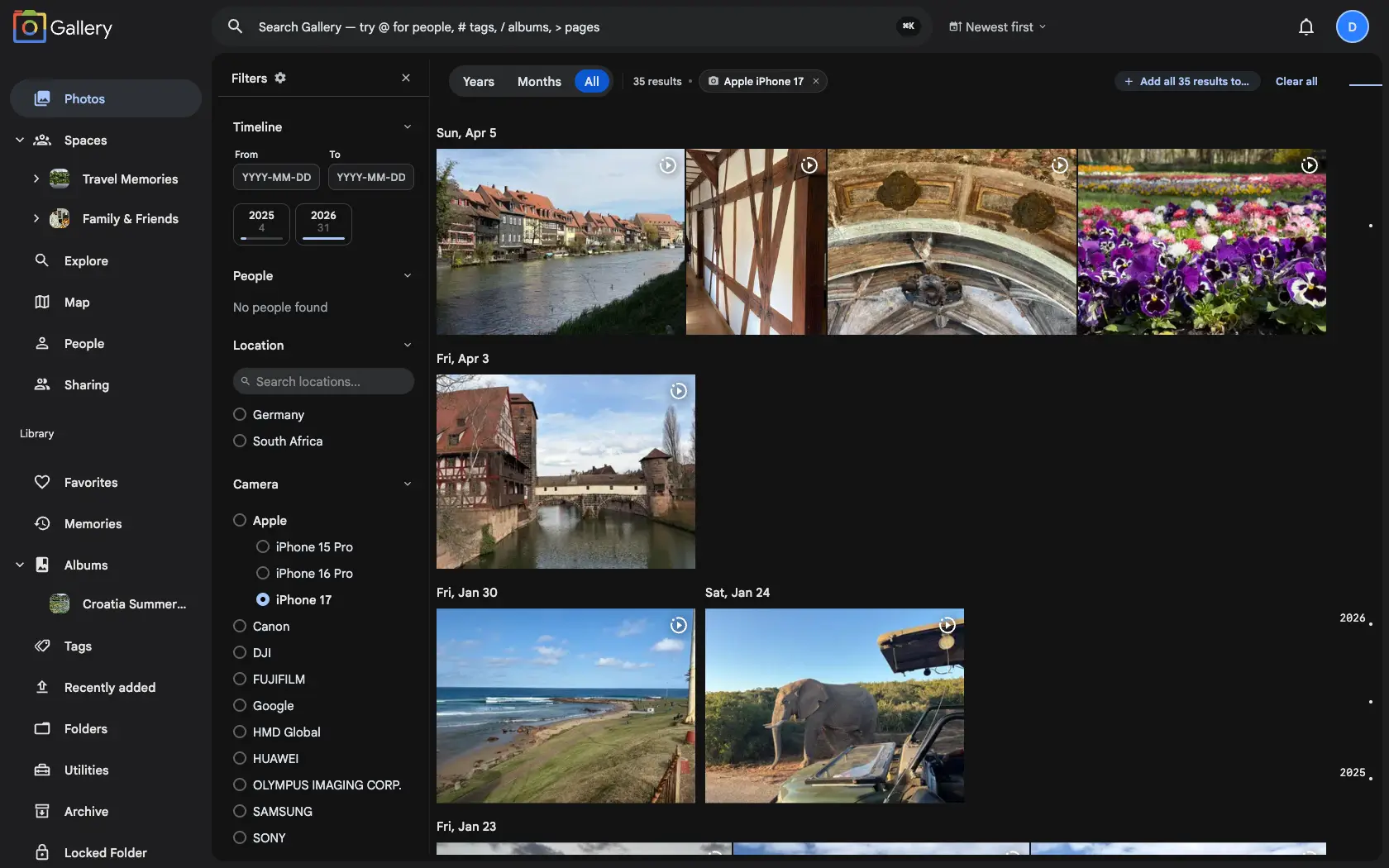
Click any metadata value in the photo viewer (camera, lens, place, date, tag, filename) and the surface you are already on filters down to match.
Mobile catches up with the web space People tab: open a Shared Space and browse the people who appear in it, scoped to that space rather than your whole library.
The mobile add-to-collection sheet puts Shared Spaces above albums, renders real thumbnails and space collages instead of placeholders, and picks up the last two entry points it was missing…
Adding a photo to an album inside a Shared Space used to depend on which screen you started from, and web and mobile disagreed about which screens worked.
Space albums gain the full set of seven sort options on both web and mobile, including a new "Recently linked" that orders by when the album was brought into the space — now the default,…
Storage usage can now count what a library physically occupies — originals plus thumbnails and transcodes — rather than only the originals.